
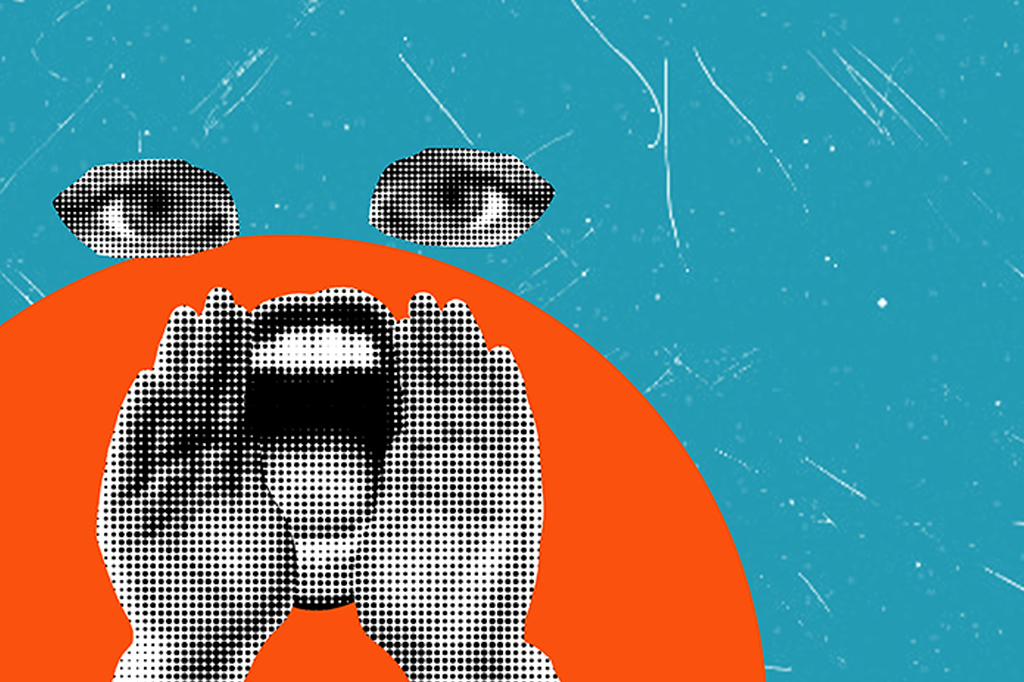
Anti-design has always been a paradox: it looks like disorder, but at its best, it’s actually one of the most intentional and disciplined forms of visual communication. It’s not simply “messy design” — it’s a rejection of predictability, polish, and the over-optimization of digital aesthetics in favor of something more human, emotional, and confrontational.
As defined in your reference, anti-design is a deliberate break from conventional structure—grid systems, clean hierarchy, and visual restraint are often disrupted on purpose to create tension, surprise, and immediacy. What might look like chaos is actually a controlled system of imbalance.
Anti-Design in 2026: From rebellion to response
In 2026, anti-design is no longer just a stylistic rebellion. It has become a cultural response to three major pressures shaping visual culture:
1. The fatigue of perfection
After years of ultra-clean UX, minimal branding, and algorithm-friendly layouts, audiences are experiencing “visual exhaustion.” Everything started to look the same—soft gradients, rounded cards, perfect spacing, infinite polish.
Anti-design interrupts that sameness. It reintroduces friction: awkward spacing, aggressive typography, clashing palettes, and compositions that don’t immediately resolve. The goal isn’t usability first—it’s attention first.
2. The backlash against AI smoothness
As generative AI floods creative industries with technically perfect but emotionally flat imagery, designers are increasingly pushing back. Current trends already point toward “imperfect by design” aesthetics—handmade textures, wobbly linework, and visible process as proof of human authorship .
Anti-design in 2026 is becoming a visual signal that says: a human made this.
3. The return of emotional design
Across branding, illustration, and editorial design, there’s a shift toward emotional honesty over clarity. That means layouts that feel unstable, urgent, or expressive rather than cleanly optimized. Even in commercial contexts, brands are starting to accept that discomfort can be memorable.
What anti-design actually looks like now
While early anti-design often felt like chaos for its own sake, the 2026 version is more refined and strategic:
- Typography used as texture instead of just readability
- Intentional misalignment to control reading rhythm
- Overlapping visual layers to create density and tension
- “Broken” grids that still secretly obey underlying structure
- Mixed analog + digital aesthetics (scan textures, collage, raw photography)
- Brutalist layouts softened with narrative or emotional cues
Importantly, designers are not abandoning fundamentals—they’re bending them. Hierarchy still exists, but it’s unstable. Legibility is challenged, but not destroyed. The best anti-design work still guides the eye; it just doesn’t do it politely.
Anti-design vs. “bad design”
A key misconception is that anti-design is just poorly executed design. In practice, the difference comes down to intent and control. Anti-design is closer to editorial expression or visual argument than traditional usability design.
A messy poster that fails to communicate is just bad design. A chaotic poster that deliberately slows reading, disrupts expectation, and creates emotional weight is anti-design.
That distinction is becoming more important in 2026 as the style gets absorbed into mainstream branding, fashion, and digital culture.
Where anti-design is heading next
The future of anti-design isn’t about becoming more extreme—it’s about becoming more integrated.
We’re moving toward a hybrid design era where:
- AI handles precision and production
- Designers reintroduce imperfection and taste
- “Clean” and “messy” coexist in the same system
Anti-design is also expanding beyond screens. Fashion, editorial, motion design, and physical installations are all adopting “intentional imperfection” as a way to signal authenticity in an increasingly synthetic visual world .
At the same time, there’s a risk: once anti-design becomes a trend system, it can lose its oppositional power. The moment chaos becomes a template, it stops being truly anti anything.
The real future of anti-design
By 2026, anti-design is less about breaking rules and more about asking better questions:
- What happens when design stops trying to be frictionless?
- How much imperfection is necessary to feel human?
- Can “ugly” be a form of clarity in a saturated world?
The most interesting work coming out of this movement won’t be the loudest or messiest. It will be the most intentionalin how it uses imperfection.
Anti-design’s future isn’t chaos for attention—it’s controlled imperfection as meaning.